
If Your Franchise Marketing Is Fragmented, It’s at Risk

The countdown to IFA 2026 is officially on. Each year, the International Franchise Association’s Annual Convention brings together the leaders shaping the future of franchising. Founders, franchise development teams, marketing executives, operators, and suppliers gather to exchange ideas, solve challenges, and prepare for what is next.
 The residential home services franchise sector is entering a period of remarkable growth, with projections indicating it will reach $150 billion by 2033, according to
  Discover how AI, data-driven marketing, and brand consistency drive trust, growth, and retention in financial services and insurance.














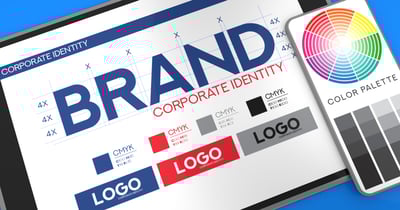
































 There’s no industry more dynamic than the insurance industry. Facing strong competition, evolving customer needs and strict regulation, insurance companies need to be able to operate consistently—while also staying flexible to quickly adapt to change.
 If you’re reading this at work right now, stop. Take a deep breath. Roll your shoulders back and straighten up in your seat. Now proceed.

 Last week, I shared tips on maximizing print budgets. In a similar vein, this week, I want to share tips on how direct mail campaigns can stand out in your target consumers’ mailboxes.
 Printing your marketing materials can seem like a simple task. But if you’ve ever managed a print process, you know there’s more to it than meets the eye. And if you have local contacts that all need individual materials printed, the campaign can quickly grow in complexity and cost—and you can wind up with inconsistent, less-than-stellar results.
 It wouldn’t surprise anyone if I said technology plays a big role in our daily lives. We spend most of our days staring at a screen of some sort, whether it’s in our office, on a bus, train or airplane, walking down the sidewalk, or just sitting on the couch. And as we become more comfortable with technology, we’ve placed more of our responsibilities in the hands of technology. This is as true of people as it is business.
 The evolution of the Internet and digital platforms might have altered the popularity of print, but it didn’t change the need for it. Print materials are a necessary part of a successful and effective communication strategy and exist in places digital media can’t, giving cross-media campaigns the chance to reach a bigger audience.
 You know direct mail – you receive it, you use it, and it’s more effective than ever. But why? Why in our era of feature-rich, multimedia, permission-based marketing does direct mail still endure? Why do marketers know in their gut that direct mail is irreplaceable?
 As we’ve discussed on this blog before,
  Everyone has caught themselves daydreaming of a scenario where they said the right thing at the right time in the right place. Maybe it was about a marriage proposal, or falling into a dream job; either way, that goes to show that all (or at least most) of us at some level recognize the inherent value in the relationship between message, time and place. These elements are no less valuable when it comes to marketing and sales.
 It’s a no-brainer to say customer service matters, but some recent studies really quantify just how much it matters. In one study, respondents indicated that they stand to lose up to 21% of annual revenue as a result of not offering a positive, consistent and brand-relevant customer experience.
 From Deadlines to bottom-lines, I put my marketing department under constant pressure to show ROI. This means every project and every process must be evaluated and prioritized based on the resources available and the return it will generate. In short, you need to get the most out of your team at all times.
 Part of any marketer’s role (and any executive’s role, really) is to identify emerging industry trends and separate those with real staying power from the mere flavors of the week. This is particularly difficult when it comes to tracking emerging digital resources.

